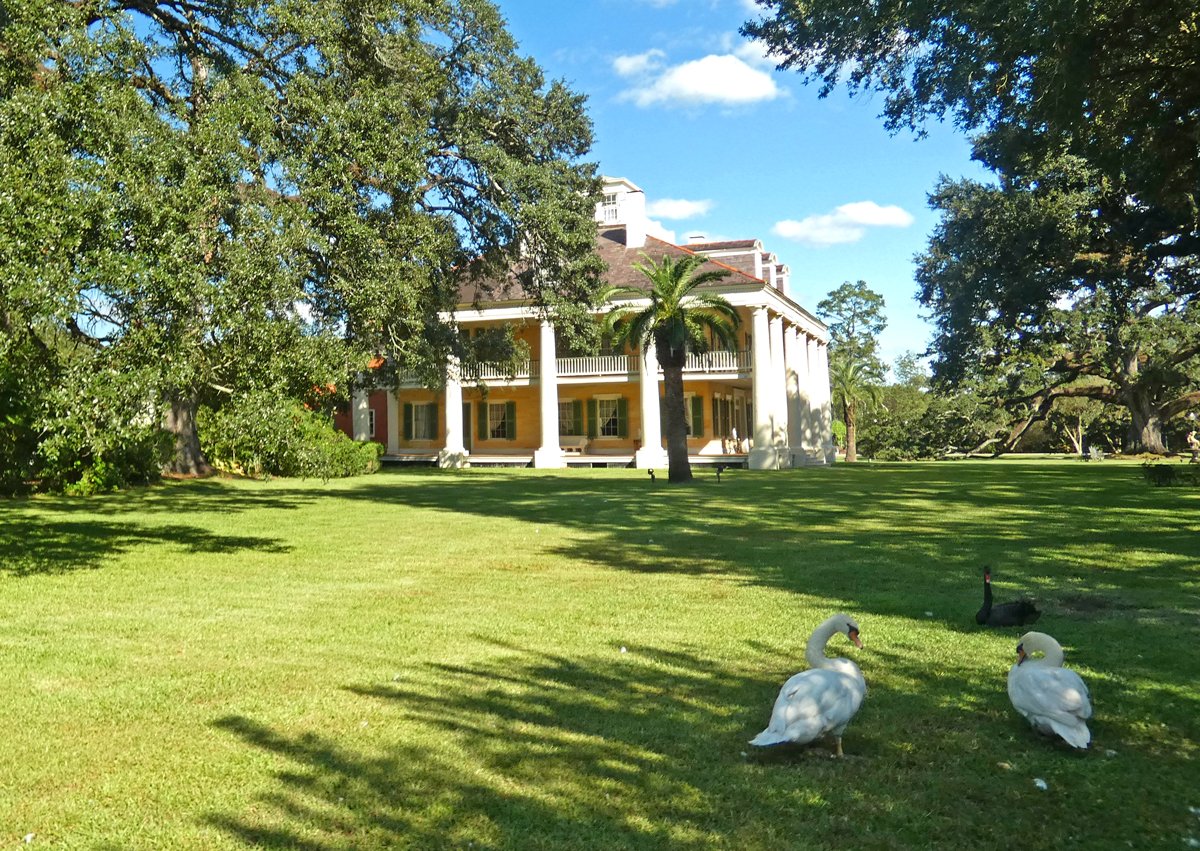

Houmas House

Houmas House sits gracefully along a bend of the Mississippi River, on land once inhabited by the Houmas Indians. Over thousands of years, the river shaped this area with fertile soil, transforming it into one of the South’s most productive agricultural regions. By the late 1700s, European settlers recognized the land’s potential. They began transforming it into a thriving plantation, launching an era of sugarcane farming that would become central to the property’s history.

Standing beneath the live oaks at Houmas House, you feel the contradictions of Louisiana’s River Road in real time—the beauty, the wealth, and the unspoken histories that still cling to the land. Our conversation with Kevin Kelly revealed a property that isn’t just preserved, but constantly reinterpreted. And upriver, the story shifts: historian Daniel Rasmussen brings the 1811 slave revolt out of the shadows, reminding us that New Orleans’ past is shaped as much by resistance as by refinement. By the time native writer Laura Martone joins us to share the New Orleans she grew up in—the food, the quirks, the quiet corners—you begin to see the region not as a series of attractions, but as a living, layered place where memory and modern life collide.